When a warning light pops up on your dashboard, it’s easy to feel that immediate knot in your stomach. Two lights that cause the most confusion are the ABS warning light and the brake warning light. They look similar, they both involve your brakes, but they’re telling you two completely different things.
At Westside Auto Pros in Clive, IA, we see this confusion all the time, and we want to clear it up so you know exactly what to do when either one lights up.
What Clive, IA Drivers Need to Know About Dashboard Warning Lights
Your vehicle is designed to communicate with you. Every warning light serves a specific purpose, and knowing what each one means can be the difference between a minor repair and a serious safety situation. When it comes to your braking system, there are two distinct lights you need to understand.
What Is the ABS Warning Light?
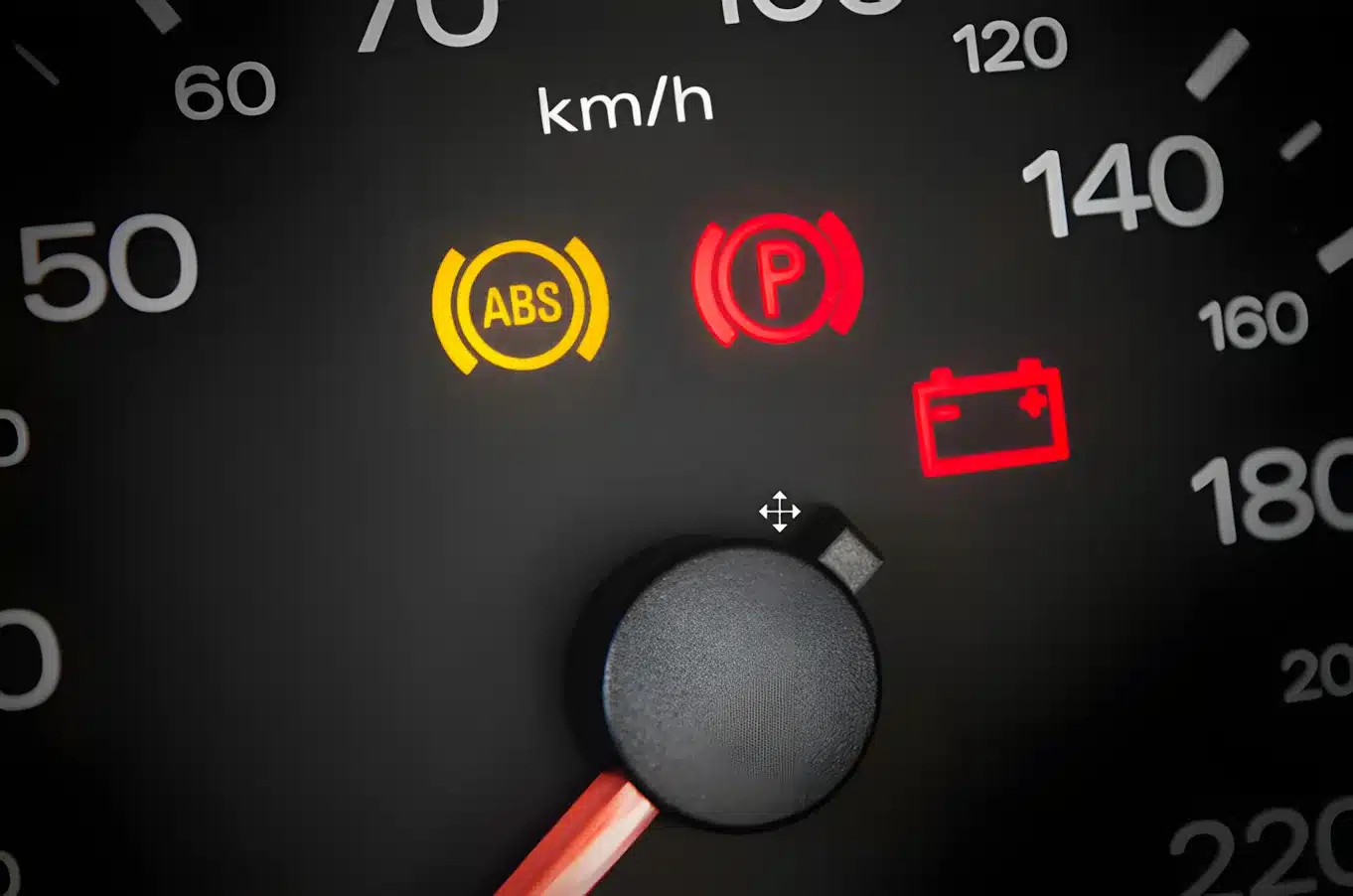
The ABS warning light stands for Anti-Lock Braking System. This system is designed to prevent your wheels from locking up during hard or sudden braking, especially on slick Iowa roads in winter. When the ABS light turns on, it means something within that electronic system has triggered a fault, typically a wheel speed sensor, a hydraulic pump, or the ABS control module.
Here’s the important part: if your ABS light is on but your regular brake light is not, your standard braking ability is still intact. You can still stop your vehicle. What you’ve lost is the anti-lock assist that helps you maintain steering control during emergency braking situations.
What Is the Brake Warning Light?
The brake warning light is a different story. This light monitors your primary braking system and can indicate several things:
- Your parking brake is still engaged
- Your brake fluid is low
- There’s a hydraulic pressure imbalance in your brake lines
- Your brake pads are worn down to the wear indicator
If this light comes on while you’re driving and your parking brake is fully released, treat it seriously. Low brake fluid or pressure issues can mean your ability to stop is genuinely compromised.
ABS Warning Light vs Brake Warning Light: Side-by-Side Comparison
To make this easier to understand, here’s a quick breakdown of how these two lights differ:
| Feature | ABS Warning Light | Brake Warning Light |
| What It Monitors | Anti-lock braking system (electronic) | Primary braking system (hydraulic/mechanical) |
| Color | Yellow or amber | Red |
| Affects Normal Braking? | No (in most cases) | Yes, potentially |
| Common Causes | Wheel speed sensor, ABS module, wiring | Low fluid, worn pads, parking brake, pressure issue |
| Urgency Level | Moderate, schedule soon | High, address immediately if not parking brake |
| Safe to Drive? | Generally yes, with caution | Depends on cause, have it checked right away |
| System Type | Electronic safety assist | Core stopping ability |
The color alone is a helpful first signal. A red brake warning light demands more immediate attention than a yellow ABS light. That said, neither should be ignored.
Which Warning Light Is More Serious for Drivers in Clive and West Des Moines?
This is the question we hear most. The short answer is that a red brake warning light is generally more urgent than a yellow ABS light. Here’s why.
Your ABS is a safety assist system. Losing it doesn’t mean you can’t stop; it means you lose some of the electronic help during extreme braking scenarios. Drivers managed perfectly fine before ABS existed.
A red brake light, on the other hand, can signal that your core stopping system is compromised. Low brake fluid sometimes indicates a leak. Pressure imbalances can cause longer stopping distances or even brake failure in serious cases. That’s not something to drive on and hope for the best.
That said, both lights deserve a proper diagnosis. At Westside Auto Pros, we don’t guess. We use Snap-On, Autel and Autologic scanners to pull the fault codes and find the source of the problem before recommending any repair. That way, you’re only paying for what needs to be fixed.
Can Both Lights Come On at the Same Time?
Yes, and when they do, take it seriously. If your ABS light and brake warning light are both illuminated at the same time, it often points to a brake fluid pressure issue that’s affecting both systems simultaneously.
Some vehicles will trigger both lights when:
- Brake fluid drops below a critical level
- There’s a serious hydraulic failure
- A wheel speed sensor has failed in a way that affects both systems
If you see both lights on at the same time, we’d recommend not driving the vehicle until it’s been inspected. This combination is one of the clearer signals that your braking system needs immediate attention.
Do ABS Issues Affect Stopping Distance on Iowa Roads?
Under normal braking conditions, your ABS light being on won’t significantly change how long it takes you to stop. Your brakes still work. The difference shows up in emergency situations, specifically on wet, icy, or gravel surfaces where wheel lockup is more likely.
Without a functioning ABS system, hard braking can cause your wheels to lock, which reduces your ability to steer around an obstacle and may actually increase stopping distance on slippery surfaces. For drivers in Clive, West Des Moines, Urbandale, and Johnston, where Iowa winters bring ice and snow regularly, a working ABS system genuinely matters.
Ready to get your brake system checked? Schedule your appointment online or call Westside Auto Pros at 515-225-9090. We’re located at 1901 NW 92nd Ct, Clive, IA 50325.
What Triggers These Warning Lights?
Common ABS Warning Light Causes
- Faulty or dirty wheel speed sensor (most common)
- Failing ABS hydraulic pump or modulator
- Damaged ABS control module
- Low brake fluid affecting ABS sensor readings
- Damaged wiring or a blown fuse in the ABS circuit
Common Brake Warning Light Causes
- Parking brake left partially engaged
- Low brake fluid level
- Worn brake pads triggering the wear sensor
- Hydraulic pressure imbalance between front and rear brakes
- Failing brake master cylinder
- Brake line leak
Why Clive, IA Drivers Deserve a Diagnostic-First Approach to Brake Repair
One of the things we believe strongly in at Westside Auto Pros is not throwing parts at a problem. When your ABS or brake warning light comes on, the smart move is to have a technician connect a scanner, pull the fault codes, and find the actual root cause.
Why does this matter? Because an ABS light could be a $30 wheel speed sensor or a $400 ABS module. Without proper diagnostics, you might replace the wrong component entirely and still have the light on when you leave.
All of our technicians are ASE Master Certified, which means they’re trained to work through these systems accurately and efficiently. We use Snap-On, Autel, and Autologic scanners to give us a clear picture of what’s happening before any repair work begins.
Why Drivers in Clive and the Des Moines Area Trust Westside Auto Pros for Brake Repair
We’re not going to tell you we’re the cheapest option around, because we’re not trying to be. What we offer is the kind of service that actually fixes the problem the first time, backed by a warranty that’s hard to match anywhere in the industry.
- Lifetime Parts and Labor Warranty on most repairs
- 36-Month/36,000-Mile Nationwide Warranty as our minimum
- All ASE Master Certified technicians
- AAA Approved Repair Facility
- NAPA AutoCare Center
- Complimentary loaner cars available up to 48 hours
- Shuttle service, pick-up and delivery, and early bird drop-off
- Snap-On, Autel, and Autologic diagnostic scanners
We serve drivers from Clive, West Des Moines, Urbandale, Johnston, Waukee, Ankeny, and beyond. Most of our customers don’t stumble across us by accident; they come because someone they trust sent them here.
FAQs About ABS Warning Light and Brake Warning Light
What’s the difference between the ABS light and brake light?
The ABS light monitors your anti-lock braking system, an electronic safety assist, while the brake warning light monitors your primary hydraulic braking system. One affects steering control during emergency stops; the other can affect your basic ability to stop.
Which warning light is more serious?
The red brake warning light is generally more urgent because it can indicate low fluid, a pressure issue, or worn brake pads that compromise actual stopping ability. The ABS light, usually yellow, signals a fault in a safety assist system but rarely affects normal braking.
Can both lights turn on at the same time?
Yes. When both lights illuminate simultaneously, it often points to a brake fluid pressure issue or hydraulic failure affecting both systems at once. This combination warrants immediate inspection rather than continued driving.
Do ABS issues affect stopping distance?
Under normal conditions, a faulty ABS system won’t dramatically change stopping distance. However, on slippery or uneven surfaces, a non-functioning ABS can cause wheel lockup that increases stopping distance and reduces steering control during emergency braking.
Who diagnoses brake warning lights near Clive, IA?
Independent repair shops with ASE Master Certified technicians and advanced diagnostic equipment are well-equipped to diagnose brake warning lights. A proper scan and inspection will identify the root cause and prevent unnecessary parts replacement.
Schedule Your Brake Repair in Clive, IA at Westside Auto Pros Today!
Don’t wait on a warning light, especially one connected to your brakes. Whether it’s an ABS fault or a brake system concern, the team at Westside Auto Pros will walk you through exactly what we find and what it means for your vehicle.
Visit us at 1901 NW 92nd Ct, Clive, IA 50325 or call 515-225-9090 to schedule your brake inspection. You can also book your appointment online at any time.
For the Best, Head West! Westside Auto Pros.